A recent article in a high-profile food magazine got me thinking about how to define the difference between an “osteria” and a “trattoria.”
Most Italians will tell you that while a trattoria (pronounced traht-toh-REE-ah) focuses on food, with wine as an added element, the osteria (ohs-teh-REE-ah) gives equal weight to its menu and wine list and might also have an extended small plates offering.
While you visit the trattoria exclusively to dine, the osteria might offer proper dining but also a “wine bar” setting where you can snack and taste different wines by-the-glass.
The word trattoria comes from the Latin trahere meaning to drag or to pull.
Its kinship to the word trattore or tractor in English reveals its origin: the earliest trattorie were places where farmers “dragged” (“delivered”) their food to be prepared for consumption.
The lemma osteria comes from the Latin hospes meaning host (it would later denote also guest).
From personal experience, I would add that where trattorie are commonly found in cities and the countryside, osterie are located more typically in cities or in villages where there is some form of urban life. Historically, you visited the trattoria for an ante litteram “farm to table” experience. The osteria was geared for the traveler passing through town or the local reveler looking to socialize.
It’s important to remember that in today’s world, these terms have flexible meanings, often overlapping and often diverging from their historical and traditional usages.
So what’s the difference between the above and the ristorante? Blog post on deck!
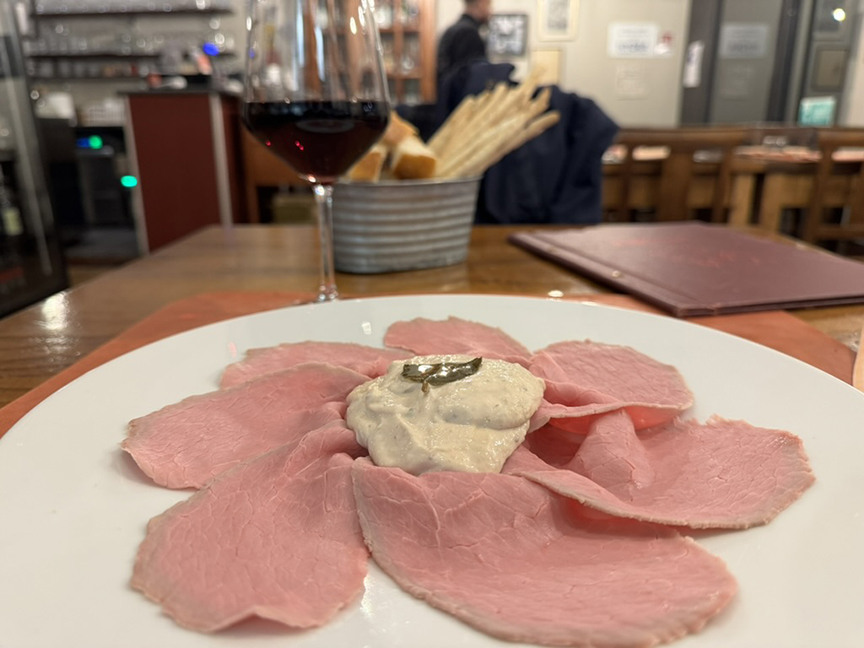
The above photo is from Le Vitel Ettoné in Turin.
Thanks for being here. Happy eating!

 Jeremy Parzen
Leave a comment